
Mill Turn Machining
Mill Turn Machining for High Mix, Low Volume Complex Parts
Owens Industries is a leader in precision mill turn machining for complex, high mix and low volume parts. Our team leverages advanced CNC mill turn machining to integrate milling and turning operations within one efficient setup. With Owens, you gain access to cutting-edge precision manufacturing capabilities for intricate geometries, difficult materials and parts requiring exceptional accuracy. Our mill turn machining expertise delivers reliable components machined with consistency, precision and speed.
Have problem parts or impossible components? In a hurry? Call on the expertise of Owens Industries. Our commitment to quality, responsiveness and customer satisfaction sets our mill turn machining services apart.

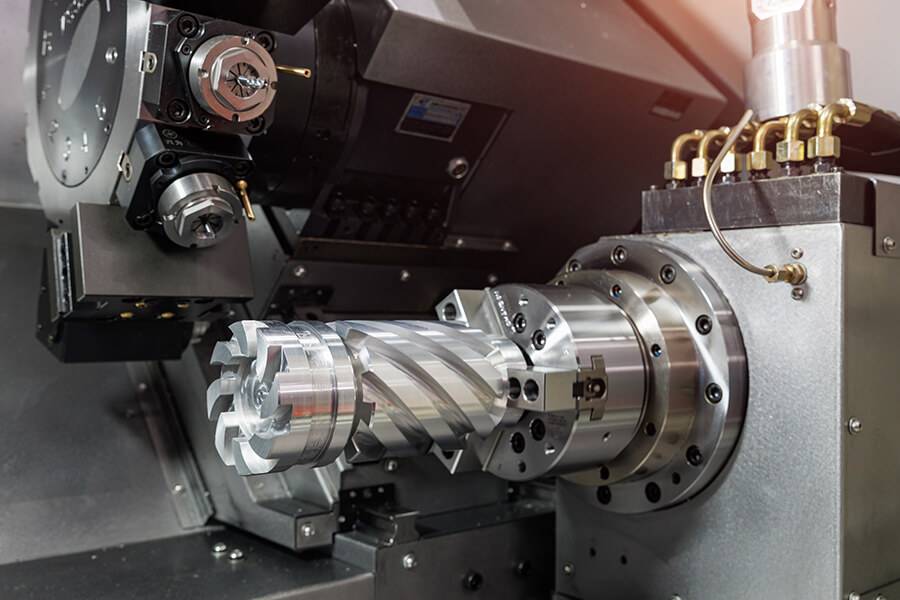
What Is Mill Turn Machining?
Mill turn machining combines milling and turning operations in one CNC machine setup. This advanced CNC machining technique eliminates the need for multiple setups, improves efficiency and supports tighter accuracy on complex components. Simultaneous turning and milling, along with the ability to handle intricate geometries, make mill turn machining a practical choice for precision manufacturing.
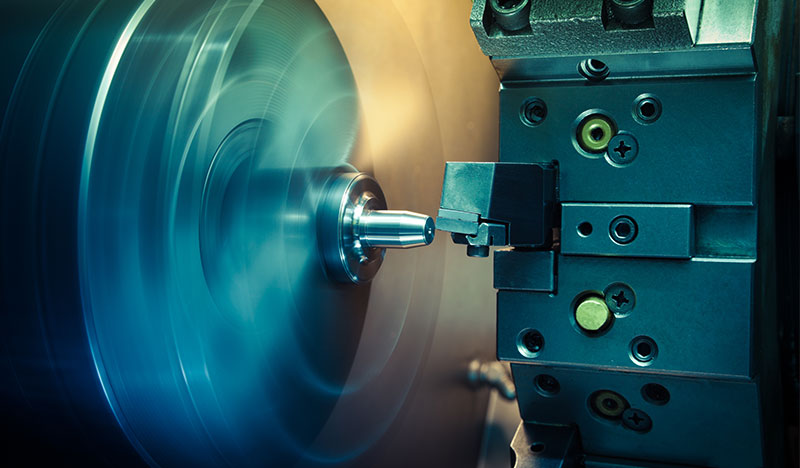
As a workpiece rotates, a mill turn machine performs rotating tooling operations such as cross-drilling, tapping, slotting and milling. This process reduces downtime associated with moving parts between separate machining centers. The result is faster production, improved repeatability and high-precision components made for demanding applications. Owens Industries uses mill turn machining to produce complex parts requiring efficient workflows and reliable dimensional accuracy.
Why Choose Owens Industries for Mill Turn Machining?
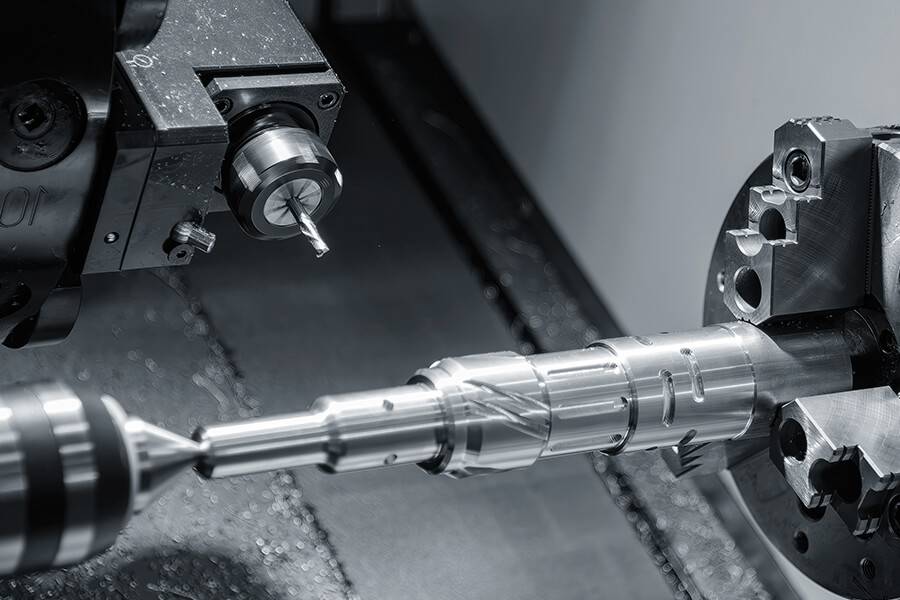
Our specialized mill turn machining process is meticulously executed for exacting precision on each component. Using advanced CNC technology, we integrate turning and milling operations to achieve tight machining tolerances and repeatable results. The simultaneous execution of multiple operations in a single setup increases efficiency and allows our mill turn machines to handle complex workpieces without unnecessary transfers.
From intricate geometries to diverse material requirements, our mill turn machining expertise supports optimal results with minimal secondary finishing. Owens Industries gives engineers, OEMs and manufacturers a reliable source for complex CNC components made to precise specifications.
View our Success Gallery to see our work!
Benefits of Multi-Axis Mill-Turn Machining
Mill turn machining combines turning and milling operations into a single, highly efficient workflow for complex CNC components.
- Single-Setup Efficiency: Mill turn machining completes complex parts in a single setup, reducing the need for multiple machines and minimizing error risks. True multitasking capability allows workpieces to rotate while tooling performs drilling, tapping, slotting and milling, leading to faster production and reduced setup time.
- Swift Production: Mill turn machines support rapid transitions from concept to final product, helping reduce lead times and improve time-to-market. Mill turn machining also allows early optimization of part designs, supporting efficient and cost-effective production.
- Enhanced Precision: Integrating turning and milling reduces repositioning, leading to improved accuracy with tight tolerances as fine as ±0.0001 inches. Mill turn machining excels in creating intricate part geometries, making it ideal for components with complex shapes, difficult features and tight dimensional requirements.
- Material Versatility: Mill turn machining handles a wide range of materials, from common metals to superalloys. Owens Industries supports demanding mill turn machining projects across industries requiring strength, precision, durability and repeatability.
Mill Turn Machining vs Milling and Turning
Milling and turning are individual CNC machining processes with distinct applications. Mill turn machining combines both capabilities within a single-machine setup, offering advantages over separate milling and turning operations. This consolidated process efficiently handles complex parts by performing milling and turning operations in one workflow.
When milling and turning are executed separately, machining operations are divided between dedicated machines. Milling uses a rotating cutting tool to remove material, while turning rotates the workpiece against a stationary cutting tool. While both methods are effective for specific operations, separate machining can require moving workpieces between machines, increasing setup time, handling time and alignment risks.
In CNC lathe machining and turning, the workpiece is held by a chuck and rotated at high speeds while cutting tools shape the component. Mill turn machining builds on this process by adding milling, drilling, tapping and other live-tooling operations within the same setup.
The choice between mill turn machining and separate milling or turning depends on part geometry, tolerance needs, production volume and material requirements. Mill turn machining stands out for complex parts, reduced setup time, better repeatability and a more efficient path from raw material to finished component.
Materials
Mill Turn Machining Materials Trusted by Owens Industries
Owens Industries supports a wide range of mill turn machining materials for demanding industries and complex part requirements. Our team selects materials based on strength, machinability, corrosion resistance, heat resistance, wear performance and final application needs. Owens Industries has extensive experience manufacturing mill-turned parts from materials such as:
- Brass
- Copper
- Stainless Steel
- Tool Steel
- Alloy Steel
- Aluminum
- Hastelloy
- Inconel
- Invar
- Maraging Steel
- Titanium
Brass

Brass
Brass is a metal known for its easy machinability and good electrical conductivity. It is ideal for applications requiring low friction, such as gears, locks, and musical instruments.
| Brass | UNS Designation | DIN Designation | Alternative Designation |
|---|---|---|---|
| C36000 | UNS C36000 | CUZN39PB3 | CuZn39Pb3 |
| C46400 | UNS C46400 | CuZn38Al | Naval Brass |
| C93200 | UNS C93200 | Saems 660 | Bearing Bronze |
| C48500 | UNS C48500 | CuZn39Sn1 | Leaded Muntz Metal |
| C26000 | UNS C26000 | CUZN30 | Cartridge Brass |
| C37700 | UNS C37700 | CUZN40PB2 | Forging Brass |
Copper

Copper
Copper is excellent at conducting heat and electricity, making it perfect for electrical uses like busbars and wire connectors. It is easily recognized by its shiny reddish-orange color and is also used in plumbing and roofing.
| Copper | UNS Designation | DIN Designation | Alternative Designation |
|---|---|---|---|
| C11000 | UNS C11000 | Cu-ETP | Electrolytic Tough Pitch (ETP) Copper |
| C10100 | UNS C10100 | OF-OK | Oxygen-Free Electronic (OFE) Copper |
| C10200 | UNS C10200 | OF-Cu | Oxygen-Free (OF) Copper |
| C28000 | UNS C28000 | CuZn40 | Muntz Metal |
| C14500 | UNS C14500 | TeCu | Tellurium Copper |
Stainless Steel

Stainless Steel
Stainless steel is known for its strength, heat, and corrosion resistance, along with its durability and attractive appearance. These qualities make it suitable for a wide range of uses, including kitchenware, medical instruments, and construction.
| Stainless Steel | UNS Designation | DIN Designation | Alternative Designation |
|---|---|---|---|
| 316L | UNS S31603 | X2CrNiMo17-12-2 | Stainless Steel 316L |
| 304 | UNS S30400 | X5CrNi18-10 | Stainless Steel 304 |
| 17-4 PH | UNS S17400 | X5CrNiCuNb16-4 | Stainless Steel 17-4 PH |
| 303 | UNS S30300 | X8CrNiS18-9 | Stainless Steel 303 |
| 420 | UNS S42000 | X20Cr13 | Stainless Steel 420 |
| 440C | UNS S44004 | X105CrMo17 | Stainless Steel 440C |
Tool Steel
Tool Steel
Tool steels are hard, stiff, and resistant to abrasion, making them perfect for manufacturing industrial tools. Their robustness is essential for cutting, drilling, and molding applications in various industries.
| Tool Steel | UNS Designation | DIN Designation | Alternative Designation |
|---|---|---|---|
| D2 | UNS T30402 | 1.2379 | X155CrVMo12-1 |
| M2 | UNS T11302 | 1.3343 | HS6-5-2C |
| A2 | UNS T30102 | 1.2363 | X100CrMoV5-1 |
| S7 | UNS T41907 | 1.2355 | 50CrMoV13-15 |
| O1 | UNS T31501 | 1.2510 | 100MnCrW4 |
| H13 | UNS T20813 | 1.2344 | X40Cr |
Alloy Steel

Alloy Steel
Alloy steels include additional elements beyond carbon, which improve their hardness, toughness, and resistance to fatigue and wear. These steels are widely used in construction, automotive, and machinery due to their enhanced properties.
| Alloy Steel | UNS Designation | DIN Designation | ISO Designation |
|---|---|---|---|
| 4140 | 1.7225 | 708M40 | 42CrMo4 |
| 4340 | 1.6565 | 817M40 | 40NiCrMo6 |
| 8620 | 1.6523 | 805M20 | 20NiCrMo2 |
| 52100 | 1.3505 | 100Cr6 | SUJ2 |
| 4142 | 1.7227 | 708M40T | 41CrMoS4 |
| 6150 | 1.8159 | 735A51 | 50CrV4 |
Aluminum

Aluminum
Aluminum alloys are lightweight and strong, with excellent thermal and electrical conductivity. They are also resistant to corrosion and can be anodized for added protection, making them ideal for aerospace and packaging industries.
| Aluminum Alloy | UNS Designation | DIN Designation | ISO Designation |
|---|---|---|---|
| 7075-T651 | 3.4365 | 76528 | AlZn5.5MgCu |
| 6082-T651 | 3.2315 | 64430 | AlSi1MgMn |
| 6060 | 3.3206 | EN AW-6060 | AlMgSi |
| 5052 | EN AW-5052 | 3.3523 | AlMg2,5 |
| 2017A | 3.1325 | 24530 | AlCu4MgSi |
Hastelloy

Hastelloy
Hastelloy is a group of nickel alloys known for their high resistance to corrosion, pitting, and stress-corrosion cracking. They are often used in harsh environments like chemical processing and aerospace, where durability is crucial.
| Hastelloy | UNS Designation | DIN Designation | Alternative Designation |
|---|---|---|---|
| C276 | UNS N10276 | 2.4819 | NiMo16Cr15W |
| C22 | UNS N06022 | 2.4602 | NiCr21Mo14W |
| B-2 | UNS N10665 | 2.4617 | NiMo28 |
| X | UNS N06002 | 2.4665 | NiCr22Fe18Mo |
| C2000 | UNS N06200 | 2.4675 | NiCr23Mo16Cu |
| G-30 | UNS N06030 | 2.4603 | NiCr29Mo9Fe |
Inconel

Inconel
Inconel is a strong, corrosion-resistant nickel alloy, ideal for challenging aerospace applications. It can withstand extreme temperatures and pressures, making it suitable for jet engines and gas turbines.
| Inconel | UNS Designation | DIN Designation | Alternative Designation |
|---|---|---|---|
| 718 | UNS N07718 | 2.4668 | NiCr19Fe19Nb5Mo3 |
| 625 | UNS N06625 | 2.4856 | NiCr22Mo9Nb |
| 600 | UNS N06600 | 2.4816 | NiCr15Fe |
| X-750 | UNS N07750 | 2.4669 | NiCr15Fe7TiAl |
| 601 | UNS N06601 | 2.4851 | NiCr23Fe |
| 725 | UNS N07725 | 2.4668 | NiCr19Fe19Nb5Mo3 |
Invar

Invar
Invar is a nickel alloy with very low thermal expansion, making it highly stable and perfect for precision applications such as instrumentation and aerostructure molds. It is also used in scientific instruments where dimensional stability is critical.
| Invar | UNS Designation | DIN Designation | Alternative Designation |
|---|---|---|---|
| 36 | UNS K93600 | 1.3912 | FeNi36 |
| 42 | UNS K94200 | 1.3917 | FeNi42 |
| 48 | UNS K94800 | 1.3922 | FeNi48 |
| 32-5 | UNS K94610 | 1.3911 | FeNi32-5 |
| 42-6 | UNS K94620 | 1.3913 | FeNi42-6 |
| 46 | UNS K94630 | 1.3914 | FeNi46 |
Maraging Steel
Maraging Steel
Maraging steels are ultra-high-strength steels that are easy to machine and weld without causing distortion. They gain their exceptional hardness and toughness from a special heat-treating process, making them suitable for aerospace and tooling applications.
| Maraging Steel | UNS Designation | DIN Designation | Alternative Designation |
|---|---|---|---|
| 200 | UNS K93120 | 1.6359 | 20Ni Maraging Steel C200 |
| 250 | UNS K92890 | 1.6358 | 18Ni Maraging Steel C250 |
| 300 | UNS K93120 | 1.6354 | 18Ni Maraging Steel C300 |
| 350 | UNS K93160 | 1.6356 | 18Ni Maraging Steel C350 |
| 400 | UNS K91460 | 1.6352 | Custom 465 Stainless |
| 500 | UNS K92810 | 1.6354 | Custom Age 625 Plus |
Titanium

Titanium
Titanium is a lightweight metal with excellent strength, low thermal expansion, and high corrosion resistance. Its ability to be sterilized and its biocompatibility make it unique, especially in medical implants and aerospace components.
| Titanium Grade | UNS Designation | DIN Designation | Alternative Designation |
|---|---|---|---|
| 5 (Ti-6Al-4V) | UNS R56400 | 3.7165 | Ti-6Al-4V |
| 2 | UNS R50400 | 3.7035 | CP Titanium |
| 23 (Ti-6Al-4V ELI) | UNS R56401 | 3.7165 | Ti-6Al-4V ELI |
| 9 (Ti-3Al-2.5V) | UNS R56320 | 3.7195 | Ti-3Al-2.5V |
| 7 (Ti-0.2Pd) | UNS R52400 | 3.7235 | Ti-0.2Pd |
| 12 (Ti-0.3Mo-0.8Ni) | UNS R53400 | 3.7105 | Ti-0.3Mo-0.8Ni |
Tolerances
Owens Industries’ Achievable Mill-Turn Machining Tolerances
Our mill turn machining services offer exceptional precision for components requiring milling and turning operations in a single setup. With tolerances as tight as ±0.0005 inches, mill turn machining combines multiple processes to create parts with accuracy, efficiency and cost-effective repeatability. This service accommodates part sizes up to 14" diameter and 16" overall length, with a standard lead time of 12 weeks.
Mill turn machining is ideal for high-quality, intricate parts in industries such as oil and gas, pharmaceuticals, aerospace, medical, defense and advanced manufacturing, where durability and dimensional accuracy are critical.
| Attribute | Value |
|---|---|
| Maximum Part Size | 14" dia x 16" oal |
| Standard Lead Time | 12 weeks |
| General Tolerances | .0025" |
| Precision Tolerances | .0005" |
| Minimum Feature Size | .060" dia x .050" oa |
| Minimum Surface Finish | 8 |
| Standard Surface Finish | 32 |
*Standard delivery dependent on workloads. Call Owens for current lead times.
Industries
Mill-Turning Industries Trusted by Owens Industries
Owens Industries provides mill turn machining services for industries with complex components, strict quality requirements and demanding tolerance needs. Our team supports engineers, OEMs and manufacturers with precision mill-turned parts for applications involving pressure control, fluid movement, medical devices, flight-critical assemblies, defense systems, production equipment and specialty industrial hardware.










FAQ
Mill Turn Machining FAQs
What is mill turn machining?
Mill turn machining is a CNC process combining milling and turning operations within one machine setup. This approach reduces handling, improves accuracy and supports efficient production of complex parts.
How does mill turn machining differ from traditional machining processes?
Mill turn machining integrates milling, turning, drilling, tapping and other tooling operations in one setup. Traditional machining often separates milling and turning across different machines, which can increase setup time and alignment risk.
What are the key benefits of choosing mill turn machining for complex parts?
Mill turn machining offers single-setup efficiency, true multitasking, reduced setup time, improved precision and strong versatility for complex part geometries.
How does mill turn machining compare to separate milling and turning processes?
Mill turn machining handles complex parts more efficiently by combining milling and turning in a single machine setup. Separate milling and turning may require multiple setups, part transfers and additional handling.
Why choose Owens Industries for mill turn machining services?
Owens Industries provides precision mill turn machining using advanced CNC technology, experienced machinists and proven processes for complex workpieces requiring tight tolerances.
What materials does Owens Industries use for mill turn machining?
Owens Industries machines materials such as alloy steel, aluminum, brass, bronze, carbon steel, copper, hardened steel, Hastelloy and other advanced alloys. Materials are selected based on part requirements, performance demands and final application needs.